Where they are
Both places are in the Central region, on Notre Dame Bay. Twillingate is on a group of islands linked to the main island by causeways, so you can drive straight there. Fogo Island lies further east and can only be reached by sea or air. Most visitors drive to the ferry at Farewell.
The nearest major airport is Gander (YQX). Many visitors drive up from St. John's instead. Gander is about 335 km from St. John's on the Trans-Canada Highway, roughly 3 hours 45 minutes, according to the provincial driving distance table. For flights and the ferry to the island, see getting to Newfoundland.
Getting to Twillingate
From the Trans-Canada, head north towards New World Island and follow Route 340 across the causeways to Twillingate. Travel guides commonly put the drive from Gander at about an hour and a half. Check a map for your exact route.
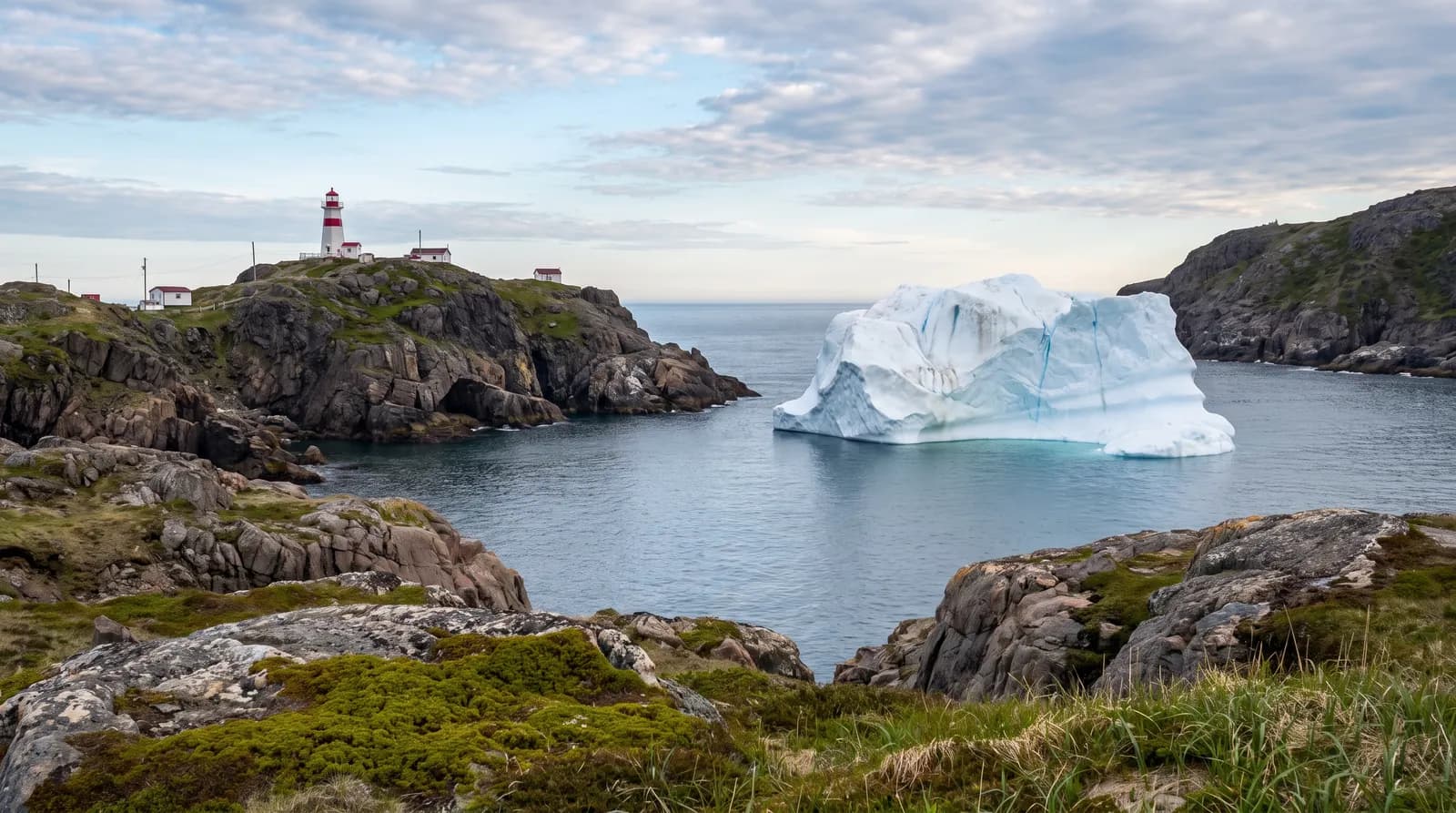
Route 340 ends at the Long Point Lighthouse at Crow Head, on the northern edge of the Twillingate islands.
Getting to Fogo Island
The provincial government runs the ferry from Farewell to Fogo Island, with some sailings stopping at Change Islands. Its published crossing times are:
- Farewell to Fogo Island (13 km): about 45 minutes direct, or about 1 hour 15 minutes when the boat also stops at Change Islands.
- Farewell to Change Islands (6 km): about 20 minutes.
Travel guides put the drive from Twillingate to Farewell at about an hour.
Practical points:
- Check the schedule before you leave. The schedule, vessel and number of sailings change by season and are sometimes disrupted by weather, ice or mechanical problems. Current schedules are posted on the provincial ferry services site, and live updates are on NL 511 (nl511.ca or the NL 511 app).
- Ask about reservations and fares. The province's Marine Services office can confirm current booking arrangements and rates for the route.
- Arrive early. The province asks vehicles going to Change Islands to arrive 30 minutes before departure, as they board first. In busy summer periods it is sensible for everyone to give themselves extra time.
- Have a backup plan. Build a spare day into a Fogo Island trip in case a crossing is cancelled.
What to do in Twillingate
Twillingate is one of the island's best-known iceberg-viewing spots, and it is also a base for whale watching in summer.
- Boat tours. Several operators run iceberg and whale tours from the Twillingate area in season. Browse boat tours, including Twillingate Adventure Tours, Twillingate Island Boat Tours, Iceberg Quest (Twillingate) and Captain Dave's Whale & Iceberg Tours.
- Long Point Lighthouse. The lighthouse at Crow Head dates from 1876. The Canadian Coast Guard notes that the grounds are open to visitors, but entry to the building is at the keeper's discretion. The cliffs here are a good vantage point for icebergs in season.
- Coastal walking. The provincial tourism site lists a trail of about 6.5 km from the lighthouse past cliffs and an old copper mine. Ask locally about other trails, and wear proper footwear.
Iceberg numbers vary a lot from year to year. Read when to see icebergs, and ask tour operators what they are seeing before you plan around them.
What to do on Fogo Island
Fogo Island is a place to slow down. It is made up of small outport communities with fishing stages, walking trails and a growing arts scene.
- Brimstone Head. A rounded headland near the community of Fogo, with a short climb to wide views over the ocean. It is often described as one of the "four corners of the flat earth", a claim popularly attributed to the Flat Earth Society.
- Tilting. A community at the eastern end of the island, known for its Irish heritage and traditional buildings.
- Fogo Island Arts studios. Fogo Island Arts runs artist studios around the island, designed by Newfoundland-born architect Todd Saunders. They are off-grid and set in striking coastal spots. They are working studios, so view them from a respectful distance unless a visit is arranged.
- Walking trails. Many communities have marked coastal trails. Ask locally about current conditions.
- Icebergs and wildlife. Fogo Island sits on the same stretch of coast as Twillingate, and icebergs are often seen in late spring and early summer.
Where to stay
Twillingate has a range of inns, B&Bs and cottages, and it makes a good base for both places if you only want a day trip to Fogo. On Fogo Island itself, the best-known property is the Fogo Island Inn, a 29-suite inn known for its contemporary architecture. There are also smaller local options. Accommodation on Fogo Island is limited, so book well ahead for summer. Browse lodging for more.
How long to allow
- Twillingate: one or two nights covers a boat tour, the lighthouse and some walking.
- Fogo Island: a day trip is possible if ferry times work, but two or more nights lets you settle in and gives you slack if a sailing is cancelled.
Distances in Newfoundland add up quickly, and moose are a real hazard after dark. See renting a car in Newfoundland before you plan your drive. For timing, see the best time to visit Newfoundland.