When to go
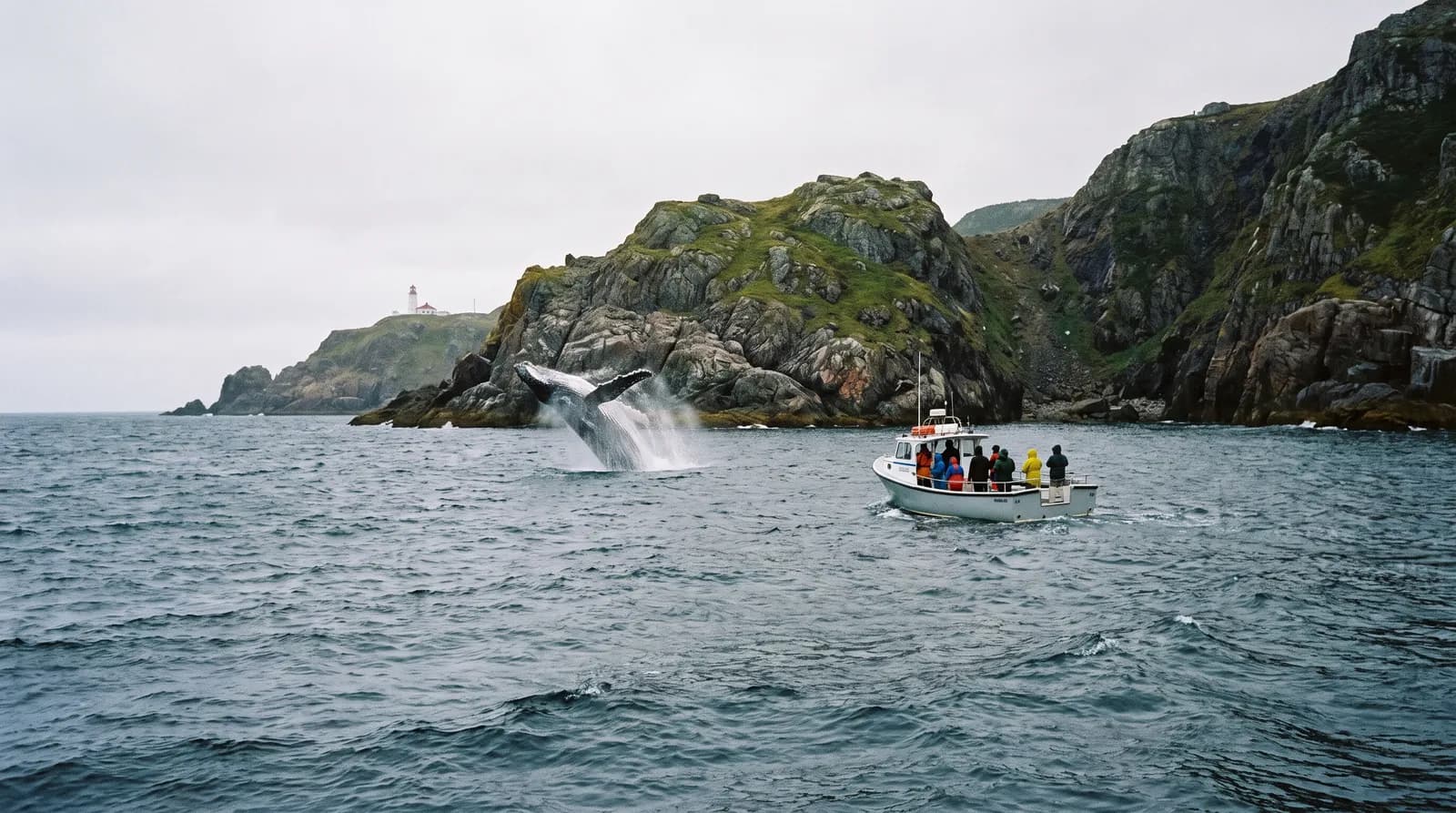
Whales are generally seen off Newfoundland from around May through September. The provincial tourism agency describes this as the main season, when whales feed close to shore and are sometimes seen breaching.
Timing within that window depends largely on food. Humpbacks and minkes follow capelin, a small fish that comes inshore to spawn. The capelin run is hard to predict, but it typically happens around mid-June or July, and many visitors find that stretch the most active time for whales near shore. Some years it is earlier, some later.
If whales are a priority, plan for late June through August and keep a day or two flexible. Weather and sea conditions can cancel boat trips, so avoid scheduling a tour on your last day.
Which species you might see
- Humpback whales. The headline species. A large population returns to feed along the coast each summer on capelin, krill and squid. They are often active at the surface, which makes them good to watch.
- Minke whales. Smaller and quicker, and common in summer. They often feed in the same areas as humpbacks.
- Fin whales. Seen offshore in some areas, sometimes associated with capelin.
- Others. Dolphins and porpoises are regular sightings. Pilot whales (locally called potheads), orcas and other species turn up less predictably. Treat these as a bonus rather than a plan.
No operator can guarantee a sighting. Ask what they have been seeing in the past few days.
Where to go
The Avalon, near St. John's. The Avalon region is the easiest place to start if you fly into St. John's.
- Bay Bulls and Witless Bay, about half an hour south of the city, are the main departure points for boat tours into the Witless Bay Ecological Reserve. These trips combine whales with the seabird colonies, including puffins, in summer. O'Brien's Boat Tours is one of the licensed operators there.
- St. John's harbour has tours that head out through the Narrows. See Iceberg Quest Ocean Tours.
- St. Vincent's, on the Irish Loop, is known for whales feeding very close to a steep beach. In the right weeks you can watch from shore without a boat.
The Bonavista Peninsula. In the Eastern region, Trinity and Bonavista are good bases. Trinity has operators offering boat trips and guided sea kayaking, such as Trinity Eco-Tours. The headlands around Bonavista and Elliston are also worth scanning from land.
Twillingate and Notre Dame Bay. In the Central region, Twillingate is best known for icebergs but also has whale tours, and early summer can overlap both. Several operators run from the town, including Twillingate Adventure Tours and Twillingate Island Boat Tours.
The west coast and beyond. Whales are also seen along the Western region and the Great Northern Peninsula, and in Labrador along the Strait of Belle Isle. Tour options are more spread out there, so check what runs locally before you go.
Boat, kayak or shore
- Larger tour boats are steadier in swell and usually have a covered area. A good choice if you are prone to seasickness or travelling with children.
- Smaller boats and zodiacs can be more flexible and closer to the water, but they are wetter and colder.
- Guided sea kayaking in sheltered bays can bring you near whales in calm conditions. Go with a guide rather than on your own.
- From shore, headlands and coastal trails can give good views when whales are feeding inshore. Binoculars help a lot.
Practical tips
- Dress warmer than you think. Even in July it can be cold and windy on the water. Bring layers, a waterproof jacket, a hat and gloves.
- Book ahead in peak season, especially for July and August weekends, but confirm the weather policy and what happens if a trip is cancelled.
- Morning or evening trips are sometimes calmer, though this varies day to day.
- Seasickness: if you are prone to it, take precautions before you board, not after.
- Respect the animals. Licensed operators follow federal rules on approach distances. If you are in your own boat or kayak, check current Fisheries and Oceans Canada guidance.
Find a tour
Browse boat tours and tours and guides by region, or use the trip planner to send a request to operators. For seabirds as well, see where to see puffins. Icebergs follow a different calendar; see when to see icebergs.