Why people go
Gros Morne National Park was inscribed as a UNESCO World Heritage Site in 1987, for its scenery and for its geology. The Tablelands are a slab of the Earth's mantle pushed up to the surface, and the park's rocks have helped geologists understand plate tectonics. Add land-locked fjords, coastal villages and a long network of hiking trails, and it is the main reason many visitors head to the Western region.
Getting there
- By air: Deer Lake Regional Airport (YDF) is the closest. Parks Canada puts it about 35 km, roughly 30 minutes, from the park's southern boundary.
- By ferry and road: from the Marine Atlantic ferry at Port aux Basques, Parks Canada estimates about four hours (around 300 km) to the park.
- From St. John's: a long day. The provincial driving table lists St. John's to Deer Lake at about 640 km and seven hours on the Trans-Canada Highway, before you reach the park.
See getting to Newfoundland for airports and ferries. You will want a car; the park's sights are spread along two roads, Route 430 on the north side of Bonne Bay and Route 431 to the south.
The main areas
Rocky Harbour and Norris Point. The most central base, with the main visitor centre in Rocky Harbour, services, and the Lobster Cove Head lighthouse nearby. Norris Point looks across Bonne Bay to the Tablelands.
Woody Point and the Tablelands. South of Bonne Bay on Route 431. The Discovery Centre near Woody Point explains the park's geology, and the Tablelands trailhead is a short drive further along. Trout River sits at the end of the road.
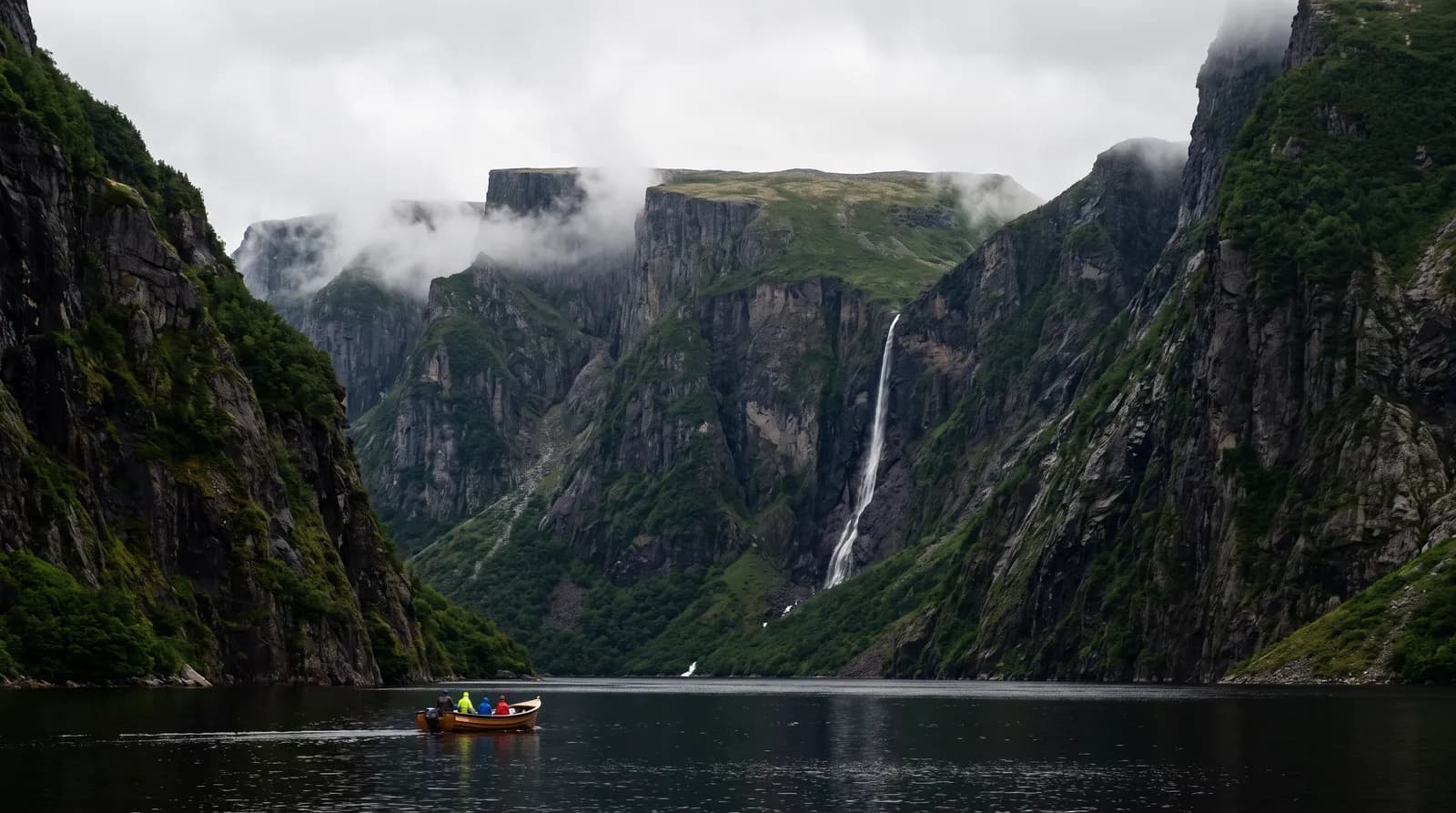
Western Brook Pond and the north. Further north on Route 430, Western Brook Pond is the park's best-known landscape: a former fjord cut off from the sea, with steep cliffs and waterfalls. Cow Head and Green Point are along this stretch too.
Things to do
- Western Brook Pond boat tour. Reached by a trail of about 3 km each way from the parking area, mostly gravel with some boardwalk. Allow around 45 minutes each way. Boat tours run from the dock, typically about two hours, from around mid-May to mid-October depending on conditions. Reservations are recommended in summer.
- Tablelands walk. An easy trail into the orange-brown, nearly barren rock of the Tablelands. Parks Canada has offered guided walks in summer; check current times at the Discovery Centre or visitor centre.
- Gros Morne Mountain. A demanding full-day summit hike. The upper Summit Trail is closed each spring to protect wildlife; in 2026 the closure ran from May 1 to June 27. The approach trail to the base of the mountain usually stays open. Check current trail conditions before you go.
- Shorter walks. The park has many trails, from short coastal loops to full-day hikes, so it suits mixed groups.
- Boat and kayak tours on Bonne Bay, and guided hikes with local operators. See tours and guides and outfitters.
Passes, hours and visitor centres
You need a Parks Canada pass to enter the park. Daily admission and annual Discovery Passes are both options, and youth admission is free. Check current fees on the Parks Canada website.
Parks Canada lists the park as open year-round, with peak season from about mid-May to mid-October. Visitor centres, the Discovery Centre and the lighthouse run on seasonal hours, so check current times. Outside the peak season, many tours and some businesses close.
Where to stay
Most visitors base themselves in Rocky Harbour, Norris Point or Woody Point. The park also runs campgrounds, which can be booked through Parks Canada. Inns and cottages fill up in July and August, so book early. Gros Morne Inn is one option near Norris Point; browse lodging for more.
Staying on one side of Bonne Bay and driving to the other is common. Driving around the bay takes longer than the map suggests, so group your days by area.
How many days
- One day gets you Western Brook Pond or the Tablelands, but not both comfortably.
- Two to three days covers the Tablelands, Western Brook Pond, a coastal walk and some time in the villages.
- Four or more leaves room for Gros Morne Mountain, weather days and longer hikes.
Many people combine Gros Morne with the drive north to L'Anse aux Meadows. See driving the Viking Trail.
Weather and timing
July and August are the warmest and busiest months. June and September can be quieter and pleasant, though some services keep shorter hours. Weather changes quickly on the coast and on exposed trails, so carry layers and rain gear on any hike.
Plan it
Browse lodging, tours and guides and attractions in the Western region, or use the trip planner to send a request to operators.